The IDIOM approach |
  
|
The IDIOM approach |
|
The fundamental concept on which IDIOM is based is the independence and business ownership of business rules, where these are separated from the technical side of application development. Business rules are no longer coded as part of the application, where they are difficult to verify and change and are not readily shared with other applications. Instead, they are exported to the application in the form of generated code. Whenever the business needs to change a rule, the generated code can be easily and inexpensively replaced, without changing the application.
Moreover, the development life cycle is simplified as IDIOM's intuitive interface enables the business rules to be developed and fully tested by the individuals who are as close to the 'source of truth' as possible i.e. by business people. These are the people who make the rules, are responsible for the rules, and who understand them best.
The development cycle – the old way
In the old development cycle (see Fig 1-3), multiple steps are required to implement a Business rule. Each step reinterprets the specification and no step provides feedback in a form the requester understands. As a result, the process takes longer and costs more, there are more opportunities for error, and the programmed rules are not readily accessible to the business.
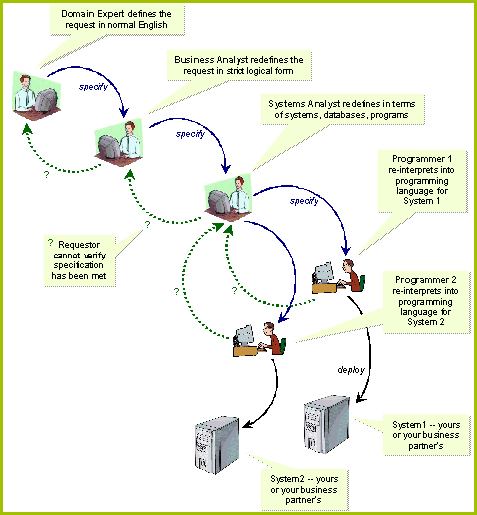
Figure 1-3: Development of business rules in the traditional development cycle
The development cycle – the IDIOM way
The IDIOM approach simplifies the development cycle for business rules, as is shown in Fig 1-4. A domain expert and a business analyst work as a close-knit team; each understands the other's specifications. In many cases, these roles may be performed by a single person. The rules are not reinterpreted into code, but are deployed directly into the host system. As a result, there are fewer opportunities for error, development time and cost are reduced, the system design is cleaner and more maintainable, and the rules are inherently accessible to the business through the IDIOM rules repository.
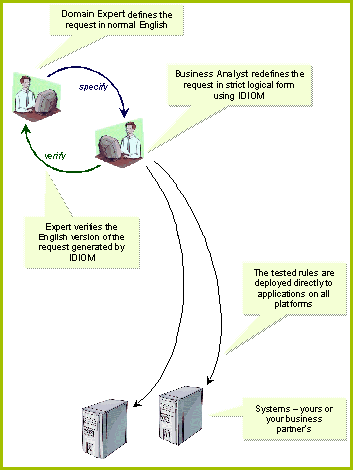
Figure 1-4: The Development Cycle for business rules with IDIOM